 The Italian Navy’s MSM-1S / USEL deep sea rescue vehicle (DSRV) has been replaced in service by the SRV-300. The heavily built deep diving submarine has been spared the breaker’s yard and is now on display. As well as being on standby to rescue submarine crews, the craft was employed to investigate wrecks and train divers in lock-out and saturation diving, including the Italian Navy’s COMSUBIN frogmen who dove to 250m for extended periods of time. Read More>....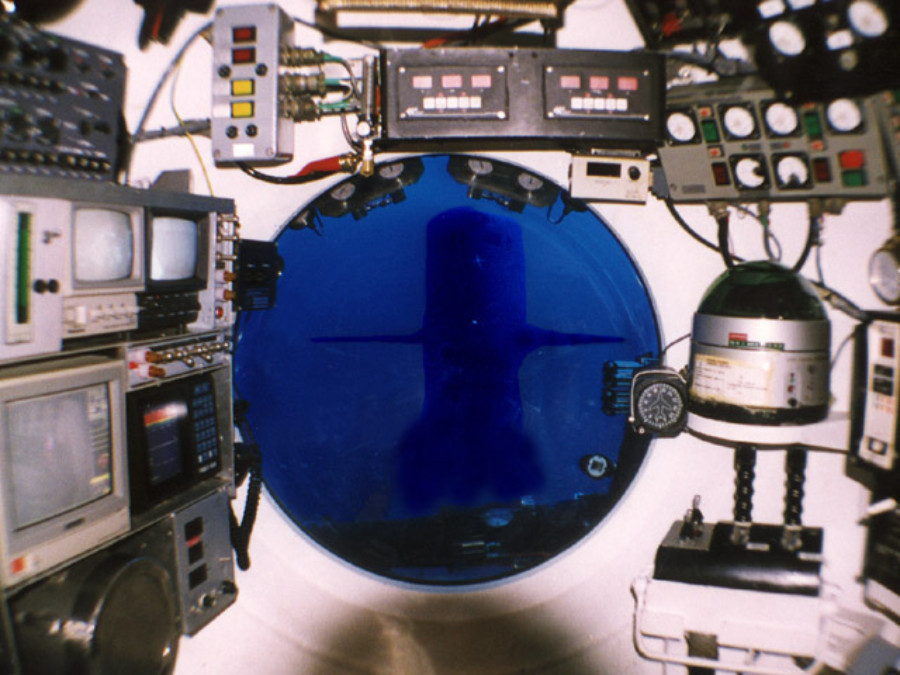
All articles
Special Operations Stealth Semi-Submarines demystified

 The recent revealing of the Singaporean Navy's stealth Specialized Marine Craft (SMC) highlights the gradual maturing and adoption of certain US designed semi-submersible and stealth technologies for Special Forces. This article builds on the popular post on the old Covert Shores Blog.Read More >....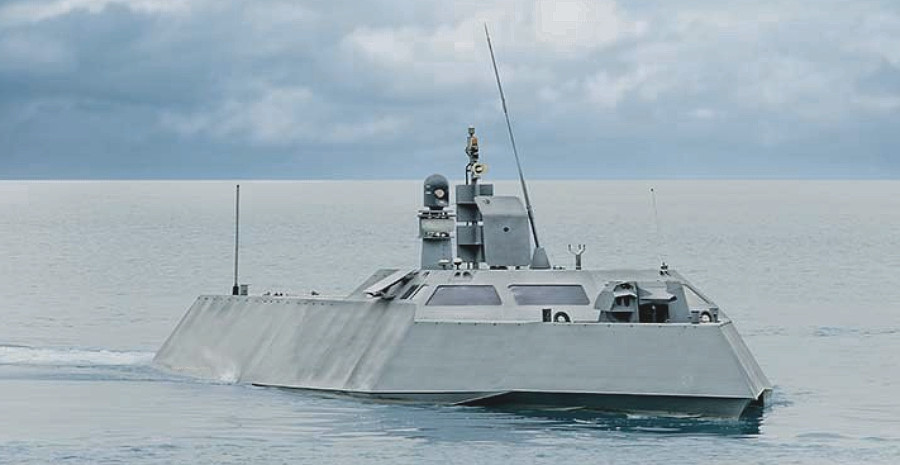
Bonex DPVs as used by Kampfschwimmers
 Bonex, a German diver propulsion vehicle (DPV) manufacturer, is known to supply several Special Forces units including the German Kampfschwimmers and Turkish SAT.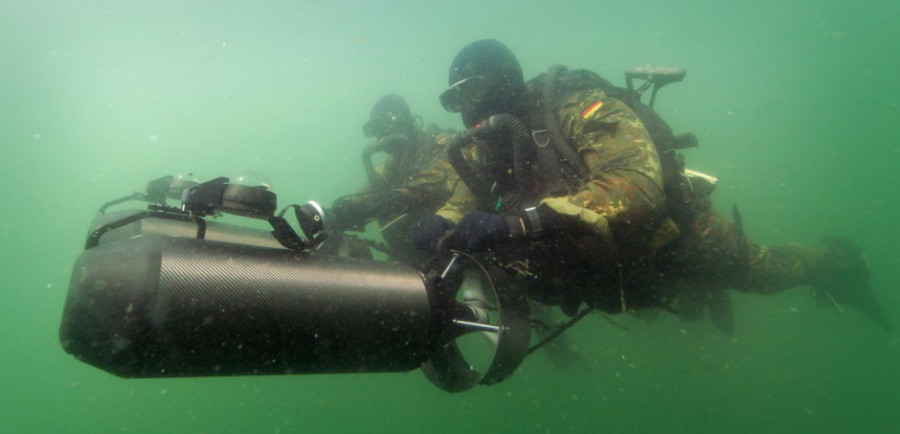
Photos of elusive Korean SDV
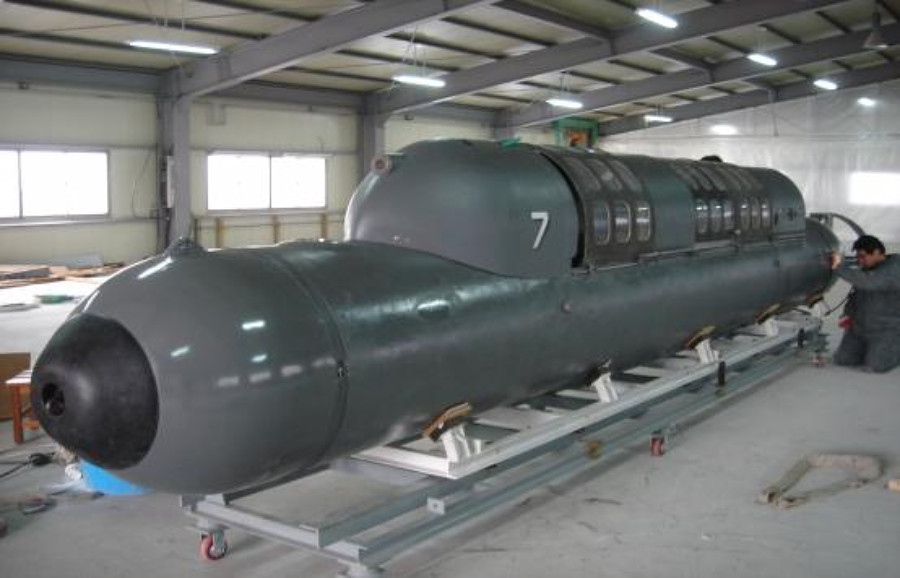
 Fresh photos of a well-kept secret, the South Korean CE3F three-man SDV.Read More>....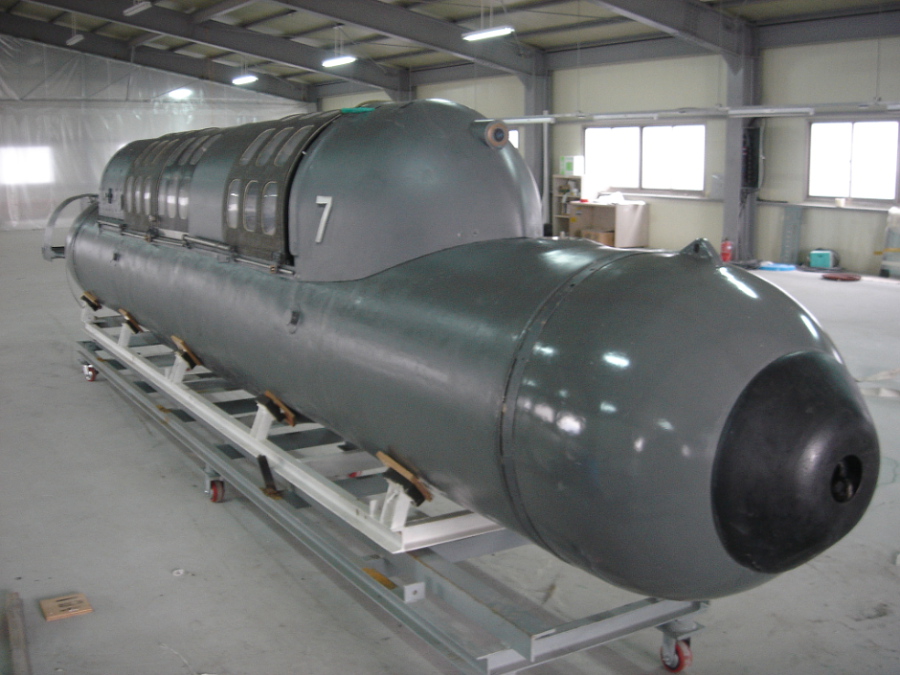
Russian Raptor SF assault boats arrive in Black Sea
 Only a couple of weeks since the very similar Kalashnikov BK-16 assault Boat was spotted at a Special Forces base in Sevastopol More INFO, the Project 03160 ‘Raptor’ appears to be confirmed as also present.Read More>....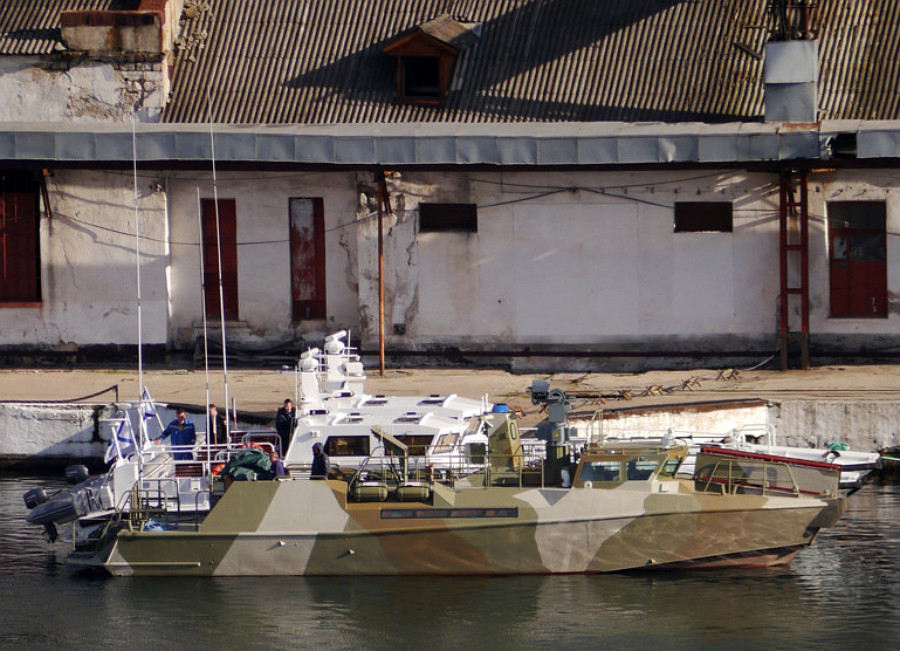
Desperate measures -Russian midget submarine of 1904
During the Siege of Port Arthur by the Imperial Japanese, the Russian defenders sought innovative ways to turn the tables on the enemy. And a hand built submarine seemed like the answer! A strong parallel to the Confederate defenders of Charleston can be made. Submarines, at the time uncertain weapons of war, represented a relatively cheap way to locally produce craft which could take on the enemy blockade. Submarines were however the preserve of creative and often eccentric engineers and although the Russian Navy tolerated the construction of the 25 ton Naletova submarine, they were reluctant to fund it. So it was built as a private enterprise by its designer. Read More >....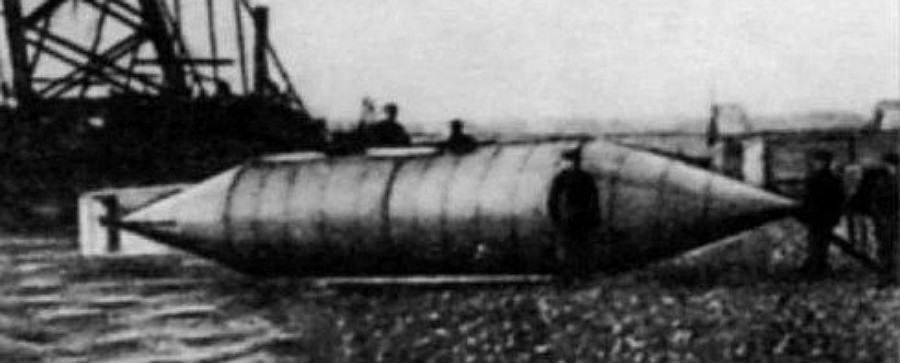
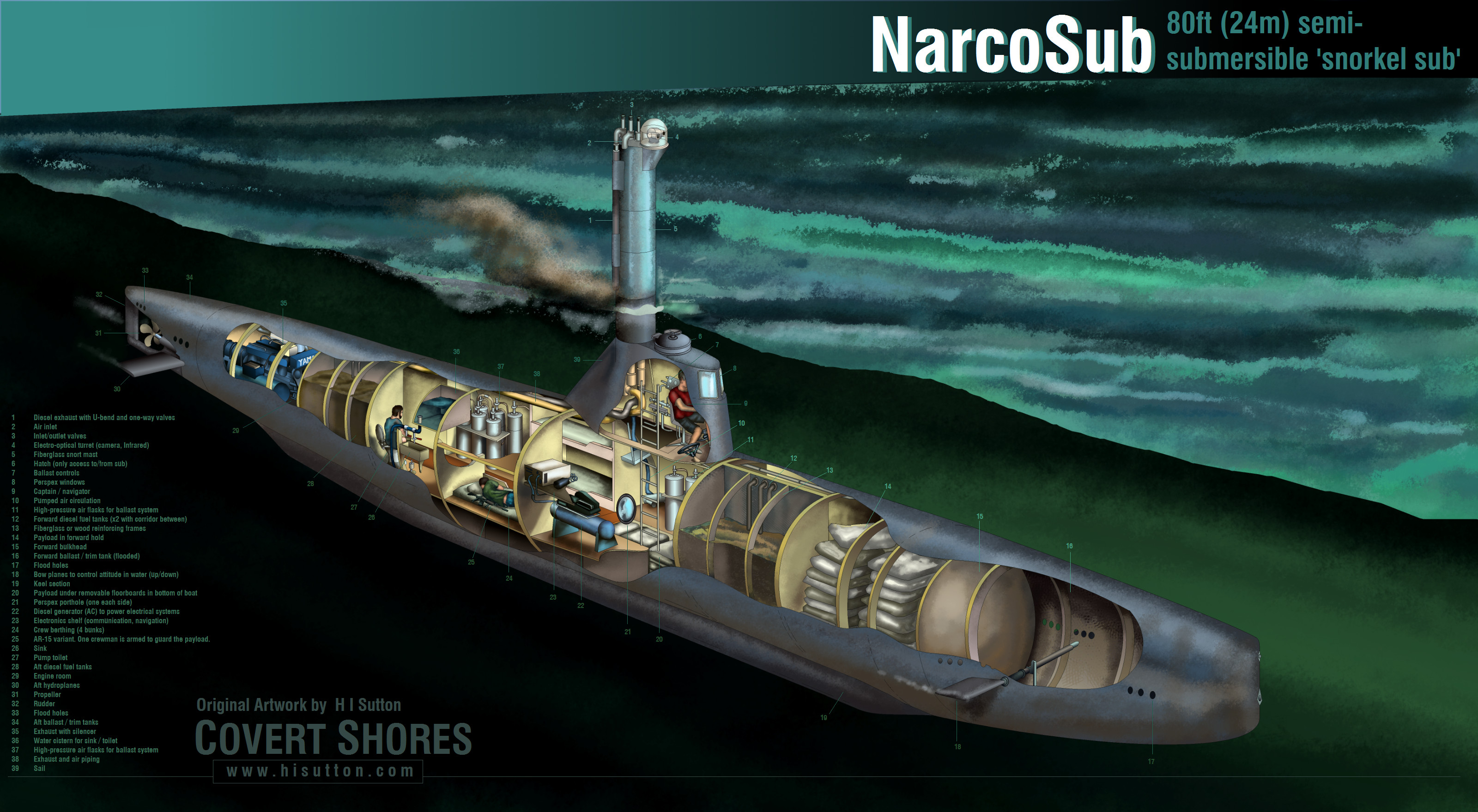
Cutaway of Narco submarine
The illustration shows the 24m (60ft) semi-submersible ‘snorkel sub’ discovered on 20th Oct 2013 in the jungle on the Ecuador/Colombian border. The design is innovative and unusual, and is one of only two true semi-submersibles captured. The vast majority of “narco subs” are Low Profile Vessels (LPVs) which cannot fully submerge. This boat cannot run fully submerged either and requires the snort mast to be above the surface. The hull is below the surface however and depth and trim can be regulated by flooding seawater into the ballast tanks. It can carry up to 8 tons of cocaine for thousands of miles, making trips from Colombia to Mexico or beyond. (see previous COVERT SHORES article)
Original artwork - CLICK for HIGH-RESOLUTION (3200px) image.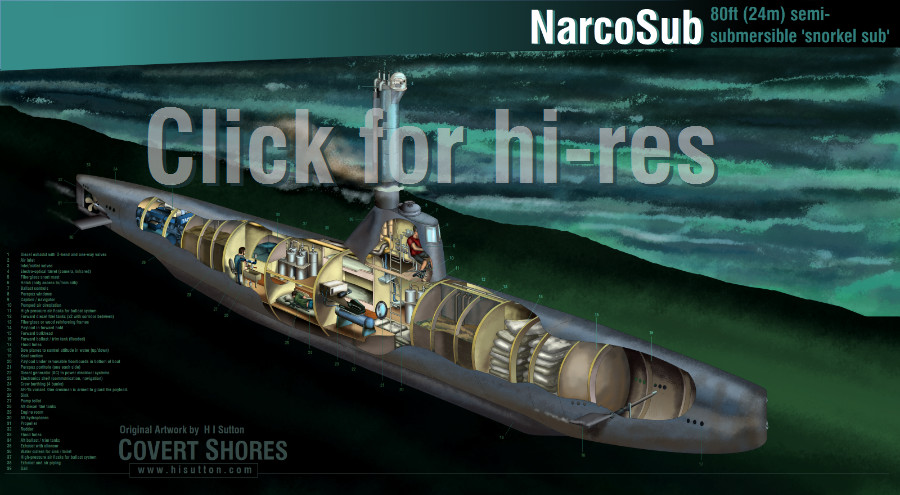
SubCat Swimmer Delivery Vehicle
 The SubCat is one of a series of virtually unknown British SDVs (Swimmer Delivery Vehicles) from the Cold War. Designed to carry two combat divers over long distances, the SubCat incorporated many innovations and was ahead of its time in several respects. .... Read More >....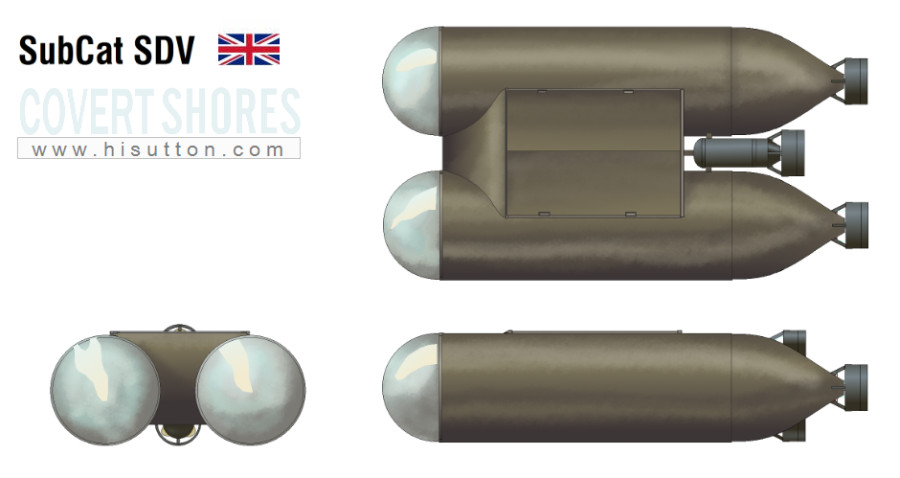
Iranian Revolutionary Guards acquire 2 US Navy Riverine Command Boats


 UPDATED: The ‘acquisition’ was short lived. Iran has released the two boats along with the crew. It remains to be seen whether the Iranian Revolutionary Guard’s navy (IRGC-N) will clone the Riverine Command Boat (RCB), a variant of the Swedish CB90 family. My guess is that it won’t be long before we see the Iranian version of the classic Combat Boat 90 (CB90), “100% developed in Iran”, being paraded by the IRGC-N. Read More >....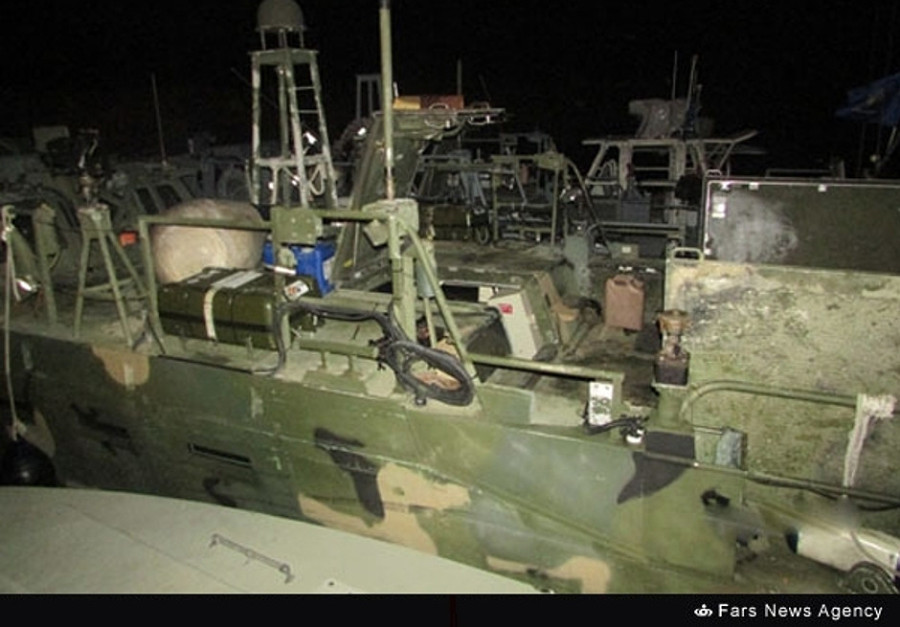
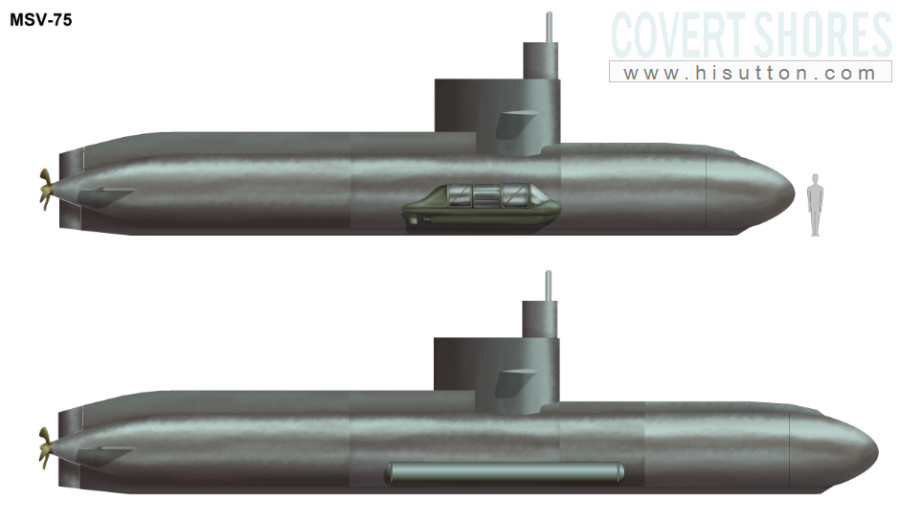
Unbuilt project MSV-75 Special Forces submarine
The 1970s saw a resurgent German submarine (U-boot) industry, and the start of a period when they would dominate the export market. Typical German submarines, such as the ubiquitous Type-209, were relatively small diesel-electric boats but packed a big punch. Several other designs were even smaller however, and aimed at the Special Forces and special operations market which was at the time dominated by Italian firm Cos.Mo.S. One of the designs on offer was the Thyssen Nordseewerke MSV-75 (Multipurpose Submersible Vessel) ..... Read More >....